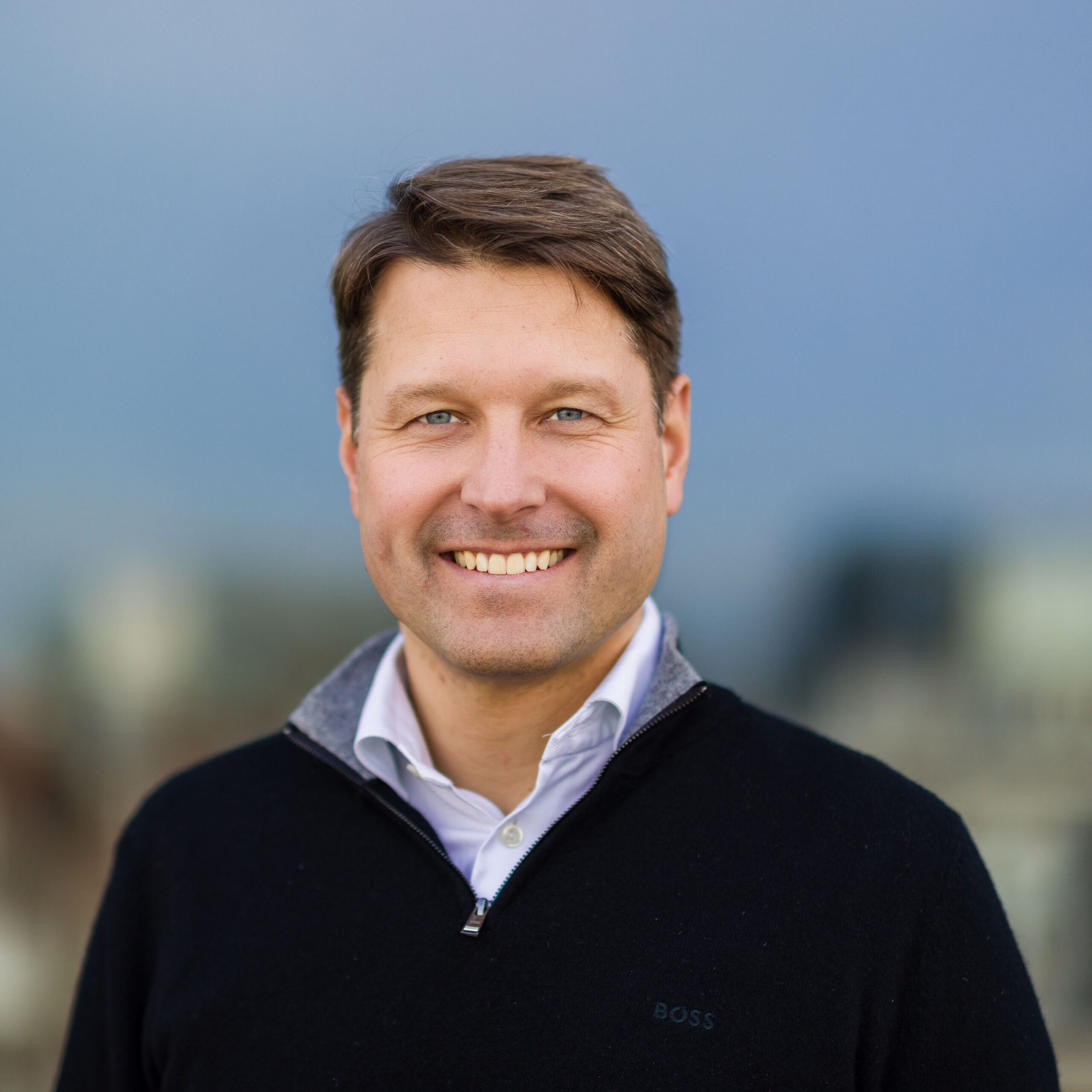
Martin Preuss
Partner & Head of DACH, Inflexion

A series of candid conversations with the private equity investors shaping the European mid-market — covering deal strategy, sector conviction, and the macro forces defining where capital goes next.
Edition no. 2
Egeria was named one of the most active financial investors in the German mid-market in 2025. We spoke with Hannes Rumer (Co-Managing Partner) about how those deals came together, how the DACH pipeline looked in H1 2026, and where he sees AI creating value rather than noise.
FINANCE Magazine named Egeria as one of the most active financial investors in the German private equity mid-market in 2025, with three transactions. Looking back at those deals, what were the key factors that made them happen?
All three transactions had something in common: they were either primary deal settings with founders and family entrepreneurs as with CPRO and Junge, or more complex carve-outs, as with Implico. Both take extra effort over a longer period to work up and those are exactly the settings we like. The vast majority of our deals over time have come from such a background. Building trust with founders, managers and entrepreneurs, finding tailored structures that work in a partnership setting, and being credible that you can help build their business into something they can be proud of at the next exit together, that is at the core of what we do. That needs the right team DNA, people with a strong sense of the Mittelstand environment, and the right capital DNA: almost half of the capital in our latest fund, Egeria 6, comes from Egeria itself and from entrepreneurs that have worked with us in the past and who trust us.
How has Egeria’s deal pipeline in the DACH region developed in H1 2026 compared with a year ago, and are seller valuation expectations converging with what buyers are willing to pay?
The pipeline looks healthy, but we will be selective. With geopolitical uncertainties, the potential impact on energy costs and inflationary pressure going forward as well as AI disruption and efficiency opportunities, the investment environment has become more focused – you have to navigate this carefully, but it also creates new opportunities.
Egeria has been active in DACH for some time and recently moved into a new office in Munich. In your view, what difference does a local presence make in the DACH mid-market — particularly when it comes to building trust with founders, management teams and intermediaries?
It is crucial. You have to be on the ground. Flying in from an ivory tower and trying to partner in the DACH Mittelstand won’t work. You need local relationships, the right networks and the right experience in teaming up with entrepreneurs in that environment. You also need a sharp proposition and focus as a firm towards the market. The same is true for the LP and the intermediary community, so that people know what you stand for and when to call you and when not.
Taking one of your 2025 DACH investments as an example, what were the top priorities in the first 100 days after closing? And what did that early phase reveal about how Egeria works with management teams beyond providing capital?
Let’s take Implico as an example. Together with the CEO Egeria has carved out that company from a rather challenging environment, which allowed us to acquire a well protected B2B niche software business at a very attractive entry valuation. We have put an excellent board and management in place that has almost doubled profitability organically in the first 18 months and is now looking at add-ons globally to further boost the company’s profile. That is a value investing approach in a space that is typically less known for it. You need to have a PE setup with a “family office touch”, an entrepreneurial DNA as well as a strong industry advisor setup in place in order to pull that off.
AI now features in almost every equity story. Where are you already seeing tangible operational impact in portfolio companies? And where do you still see more promise and narrative than real substance?
As Egeria we have always stayed true to our investment DNA in the last three decades – being a value investor in more traditional economy settings such as business services, light industrials and non-discretionary consumer. We have stayed clear of trends and cycles of PE going into certain sectors that have come in and again out of vogue and where only the early investors have made money. That really plays into our cards now.
There is hardly a company in our portfolio where AI is a direct threat to the core of the business model. It is rather typically an opportunity for efficiency improvements, either in production or other processes along the value chain or in customer acquisition. At Egeria Group level we have even funded a new venture in AI humanoid robotic, that team could help some of the portfolio companies in improving very specific use cases with immediate efficiency impact, rather than dwelling in a broader and more conceptual AI narrative. It is very hands-on, also a bit trial and error as everybody is still in the experimenting phase how you make it work in the real world. Our investors also value that long-term and “stay-true-to-your-strategy” approach with the most recent fund being oversubscribed at €1.25bn.
Which sectors in the DACH mid-market would you currently avoid? Which ones would you bet on over the next twelve months and why?
Generic high-multiple software and knowledge-based business models are clearly challenging. Even if there is no immediate direct impact on a business, the uncertainty around exit ability alone can be an issue in these settings.
We will stay true to that sector approach: business services, light industrials and non-discretionary consumer. And AI opportunity in the value chain will be an important driver of investment decisions in the future.
From Carlsquare’s perspective, Egeria’s model shows where durable value is being created in the DACH mid-market. The region remains structurally attractive: a deep pool of owner-managed businesses, a maturing succession dynamic, and complex carve-outs that reward patience and local relationships. This approach, backed by a strongly aligned capital base and an oversubscribed €1.25bn fund, underlines a disciplined, hands-on model. Amid geopolitical uncertainty, cost pressure and a fast-moving AI narrative, its DNA and sober, use-case-driven view of technology put the firm in a strong position. We look forward to continued dialogue with Hannes and the team as activity in the region develops.
About Egeria
Egeria is an independent family-led investment company with approximately EUR 4.0 billion in assets under management. Egeria was founded in 1997 by the Visser family, who are still active in the company, and has invested in over 50 platform companies since its foundation. Egeria considers itself an entrepreneurial investor that focuses on sustainable value creation through growth and operational development of its portfolio companies instead of short-term profits. While generally sector agnostic in its investment approach, Egeria focuses on market leaders, preferably in business services, light industrial and non-discretionary consumer sectors. The focus further lies on companies with growth and value creation potential in the DACH and Benelux region, with EBITDA between €10 and €50 million. Egeria is experienced in partnering with family businesses and entrepreneurial team-ups, typically alongside founder/management teams with meaningful reinvestments, while also bringing experience in navigating succession situations. Read more at www.egeriagroup.com
Edition no. 1
We sat down with Inflexion’s Martin Preuss (Partner & Head of DACH) to discuss their fundraise, their DACH ambitions, and how they are navigating an M&A environment shaped by AI, geopolitical uncertainty and Germany’s historic fiscal shift.

Congratulations on raising your new €4.5bn “Inflexion Buyout Fund VII”. What have been the main reasons for the successful fundraising in what has been a challenging fundraising environment for many?
The fundraise felt like a reflection of something we have always believed: that if you back ambitious management teams, help them grow faster than they could alone, and deliver real returns to investors, the rest follows.
Investors representing more than 100% of our previous fund’s size recommitted, which means a great deal to us, with many of our investors being with us for over ten years. At the same time we welcomed over €1 billion from new relationships, including our first Latin American investors.
LPs today are rigorous and selective, and rightly so. DPI, real, distributed cash returns, has moved firmly to the top of the agenda. Eight out of nine of our fully realised and realising funds have delivered top-quartile DPI, and that record was central to every conversation we had. We also took a deliberate decision not to use a global placement agent; every LP relationship is built and maintained directly by our team, because we believe in long-term, direct relationships, with investors just as much as with the management teams we back.
The structural case for the European mid-market also resonated strongly. Europe remains around 75% less penetrated by private equity than the US. Our portfolio businesses delivered around 20% topline growth over the past three years, against European GDP averaging around 1.5% annually. That differential, which comes from backing genuinely ambitious, structurally growing businesses, is what investors are buying into.
Following the opening of your Frankfurt office in 2024, how does the new fund shape Inflexion’s strategy for the DACH market?
Our commitment to DACH is long-term and comes from genuine conviction in the region — not from following a trend. DACH represents roughly 30% of European GDP yet has the lowest private equity penetration of any major European economy. There are exceptional businesses here, run by ambitious entrepreneurs and management teams, who often haven’t yet found the right growth partner. That is exactly the gap we want to fill.
With Buyout Fund VII at €4.5bn alongside our Partnership Capital fund, we have significant capital ready to deploy. We are looking to deploy several hundred millions in the region across both funds in the coming years.
But capital alone is never the differentiator. What we bring is a deeply hands-on approach to accelerating growth: a dedicated Value Acceleration team of nearly 20 specialists, a network of sector advisers and operating partners, and genuine expertise in the sub-sectors we back. We have done this in technology, healthcare, business services, industrials, and financial services across many cycles, and we apply real pattern recognition each time we invest.
We have also grown our local team who work alongside our London based sector experts. This mix of on the ground team and sector experts is a real differentiator. We believe that being genuinely present in the market, building relationships over time, and understanding local business culture is what allows us to be the partner management teams actually want to work with.
How would you summarise 2025 for Inflexion in DACH, and has Q1 2026 played out in line with your expectations? In your view, what were the main drivers behind these recent developments?
2025 was a year we are proud of. The highlight was completing our investment in Finanzen.net at the start of the year, a carve-out of a genuinely leading DACH investment platform that we structured bilaterally, moving quickly and with conviction when the original process broke down. The business has outperformed our investment case in both 2024 and 2025, with around 30% topline and EBITDA growth, and the transformation programme is running ahead of plan. It is a good example of what we try to do: back an ambitious leadership team, give them the support to execute at pace, and help them build something significantly more valuable.
On origination, we assessed well over 165 opportunities and built the most active bilateral pipeline we have had in the region. We were very close to an investment in two situations but stayed disciplined on price. The market picked up sharply in the second half of the year, supported by ECB rate cuts, easing inflation, and pent-up M&A. Q1 2026 has carried that momentum forward. The new German government’s infrastructure and defence spending programme is a meaningful shift in the macro backdrop. We are seeing good pipeline momentum, but this has recently slowed down because of the Iran conflict, continued tariff uncertainties and the technology market volatility.
The conditions in Q1 were better than they have been for several years: financing is more accessible, bid-ask spreads have narrowed as holding values and exit multiples have converged, and the significant backlog of 2021-vintage assets is beginning to move.
Artificial intelligence and the current macro environment are two forces that every investor is grappling with right now. How are they influencing Inflexion’s existing portfolio? What opportunities are emerging as a result of these trends and what are you actively avoiding?
On AI, our starting point is always a practical one: how can this make the businesses we back grow faster and compete more effectively? We are focused on where AI is creating genuine, durable competitive advantage for our management teams.
Within our DACH portfolio, Finanzen.net is a good example. We are actively working with the team on how AI can deepen product personalisation and improve the experience for retail investors at scale. It is a real growth lever, not a side project. More broadly across our portfolio, we see AI driving meaningful productivity improvements, better customer outcomes, and in some cases entirely new revenue streams. Our Value Acceleration team works directly alongside management to identify and implement these opportunities, not from a distance, but as genuine partners in execution.
What we are actively avoiding is backing businesses whose competitive moat depends on information asymmetry or human process complexity that AI is likely to erode. We are also wary of businesses being valued as AI stories before the commercial reality has been proven. The question we always come back to is: will this business be stronger or weaker in five years because of how AI is developing? If the answer is stronger, because the management team is moving quickly, the product is evolving, and the structural demand is non-discretionary, that is where we want to be.
Looking ahead, what is your outlook for private equity deal-making and exit activity in 2026? Which factors will be most decisive in shaping the environment?
The conditions in Q1 were better than they have been for several years: financing is more accessible, bid-ask spreads have narrowed as holding values and exit multiples have converged, and the significant backlog of 2021-vintage assets is beginning to move. We expect sponsor-to-sponsor activity to increase, and for more structured liquidity solutions (earnouts, vendor rollovers, minority stakes) to become increasingly common as sellers and buyers find creative ways to bridge valuation expectations.
For DACH specifically, the macro tailwind from Germany’s fiscal stimulus adds a further dimension. Infrastructure and defence spending at this scale creates real investment themes and improves business confidence broadly. However, the Iran conflict, continued tariff uncertainty and volatility in technology markets will bring uncertainties to the M&A market in 2026.
But beyond the market environment, the deals we are most excited about are not the ones driven by market conditions. They are the ones where we find a management team with real ambition, a clear vision for where they want to take their business, and a desire for a hands-on partner who will back them to get there faster. Those conversations are happening all the time, in good markets and difficult ones.
From Carlsquare’s perspective, Inflexion’s trajectory in DACH is a signal worth watching. The region remains structurally underserved by private equity relative to its economic weight, and the combination of Germany’s fiscal stimulus, ECB rate normalisation and a maturing generation of owner-managed businesses creates a compelling pipeline for well-capitalised, operationally hands-on sponsors. At the same time, the near-term headwinds, tariff uncertainty, geopolitical tensions and technology market volatility, mean that selectivity and execution discipline will separate the winners. Inflexion’s bilateral deal origination approach and track record on DPI put them in a strong position. We look forward to continued dialogue with the team as activity in the region picks up.
About Inflexion
Inflexion is a leading European mid-market private equity firm with €20bn under management investing in high growth, entrepreneurial businesses with ambitious management teams and working in partnership with them to accelerate growth. Inflexion’s flexible approach allows it to make both majority and minority investments in businesses typically valued between €50m to €1bn. Investment criteria include €50-€600m equity in majority and minority investments across Technology, healthcare, business services, industrials, consumer and financial services subsectors in growing, high margin and capital light businesses. With bespoke teams and dedicated capital, Inflexion’s funds invest across six key sectors from offices in London, Manchester, Amsterdam, Frankfurt, Stockholm and New York. Each investment, regardless of size or stake, has full access to Inflexion’s value acceleration support which includes international expansion, acquisitions, digital transformation, talent enhancement, commercial effectiveness and sustainability. It also benefits from international experts across South America, APAC and India dedicated to portfolio development, enabling investee companies to benefit from privileged access to these fast growth markets. Read more at www.inflexion.com