Managing Partner and Head of Debt Advisory
European Debt Markets: Quarterly Insights #4 2026
23 okt 2026
Looking back on Q3 2026
Key Insights:
- Leveraged Loan Volume Pulls Back as M&A-Related Activity Takes the Lead
European leveraged loan issuance fell by nearly a quarter in Q3 2026 to EUR 25.4bn driven by lower refinancing, while M&A-related issuances have been the bright spot in Q3. - Pricing Widens After Quarters of Compression
Average euro single-B loan spreads widened by 25 bps to E+362 and yields rose to 6.37% as the ECB raised its deposit rate by 25 bps to 2.50% in September. - Quarter Topic: Asset-Based Lending (ABL)
With funding costs rising and conventional debt capacity constrained, Asset-Based Lending helps companies unlock flexible liquidity from receivables, inventory, and equipment.
Carlsquare Debt Advisory looks back on a busy summer
Our Debt Advisory team successfully advised curea and Mérieux Equity Partners, a French healthcare-focused investment firm, on the arrangement of a construction facility to finance curea’s new headquarters. curea is a fully integrated MedTech producer specializing in high-performance, multifunctional wound dressings for the treatment of complex, highly exuding and predominantly chronic wounds.
In a separate transaction, our Carlsquare Debt Advisory team successfully advised Maguar Capital, a Munich-based technology investor specializing in B2B software, on the acquisition financing for ConSense. ConSense is an established and leading software provider offering modular Quality and Integrated Management Systems (QMS/IMS), which help organizations manage, standardize and continuously improve their quality, compliance and operational processes.
Both transactions demonstrate Carlsquare’s expertise in arranging tailored financing solutions for companies operating in specialized and growth-oriented sectors, as well as its ability to support investors and management teams throughout complex financing processes.
European Debt Market – Q3 2026 Review
European leveraged lending activities
Loan refinancing volumes decline as spreads widen in Q3 2026
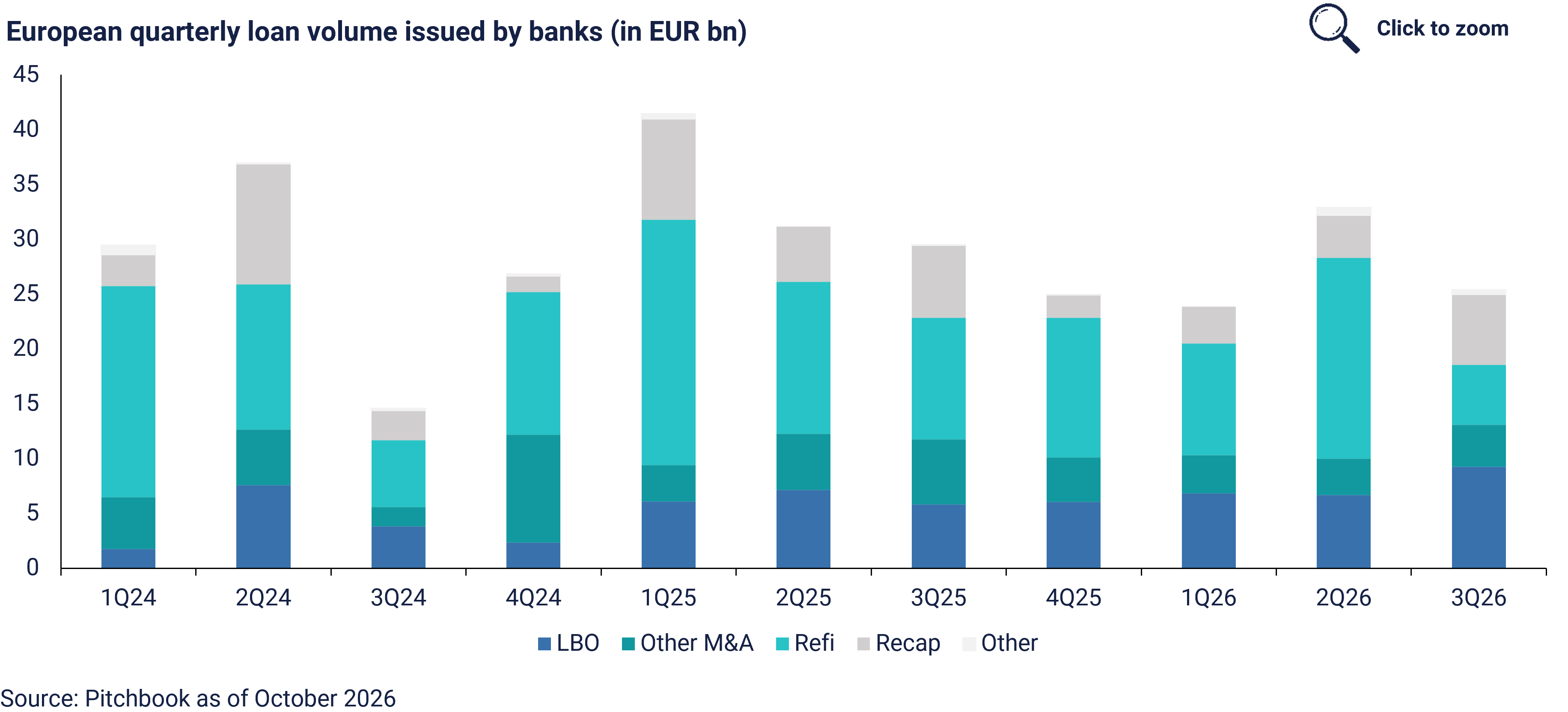
European leveraged loan activity lost momentum in the third quarter, as a sharp rise in interest rates weighed on primary market issuance. In addition to the usual summer slowdown in August, borrowers faced noticeably higher funding costs, with spreads and yields moving up and reversing several quarters of steady tightening. As a result, total loan volume fell by almost a quarter compared with the previous quarter to EUR 25.4bn, and 14% below Q3 2025.
The composition of issuance shifted noticeably compared with the previous quarter. Refinancing volume fell by nearly 70% to EUR 5.5bn, the lowest quarterly figure since Q1 2023, and accounted for only 22% of total issuance. M&A-related activity, by contrast, increased from around EUR 10bn in Q2 to EUR 13.1bn, representing 52% of total volume, the highest share since Q1 2023.
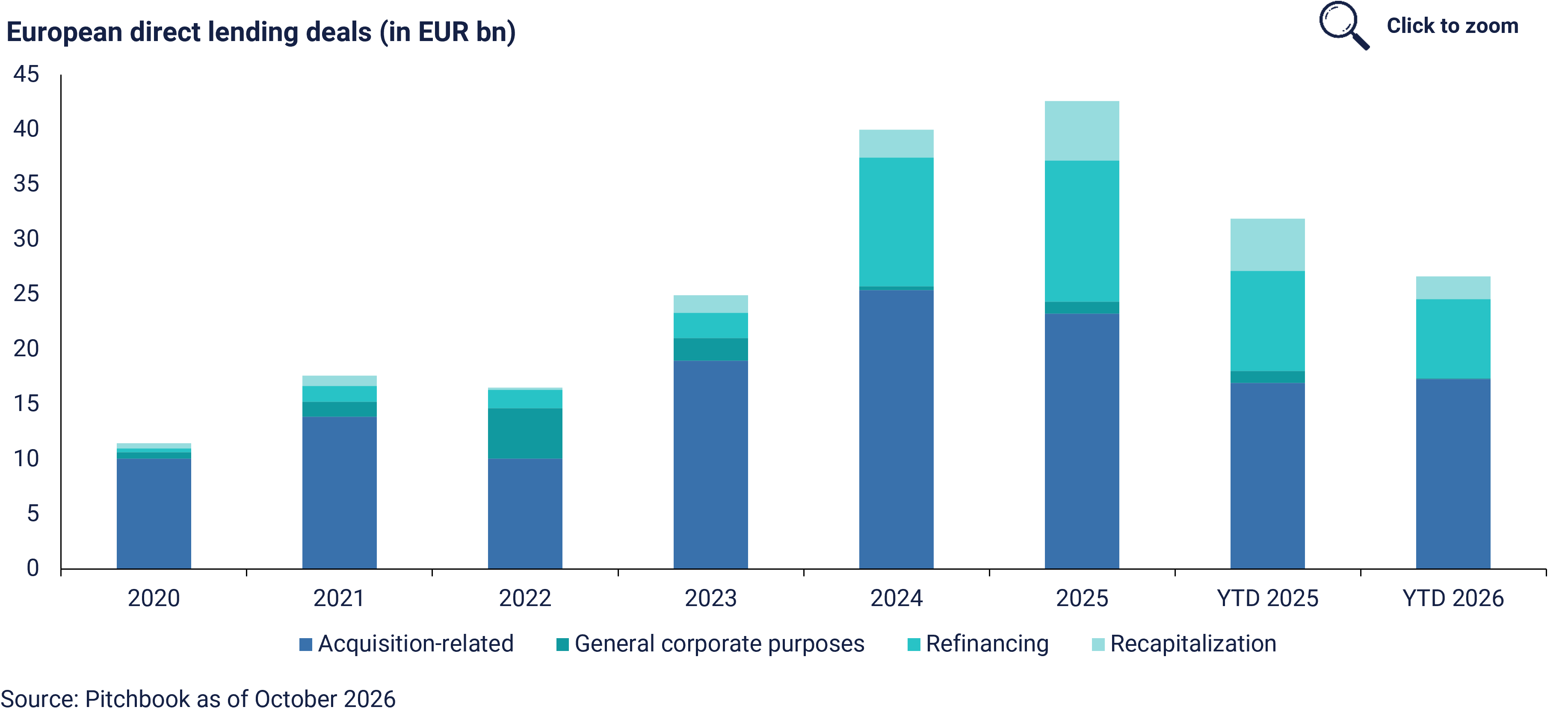
Direct lending market adjusts course in a uneven third quarter. European direct lending activity rebounded after the summer break, with estimated volume reaching EUR 9.6bn across 36 transactions in Q3 2026, the highest quarterly volume since Q4 2025. Despite this recovery, year-to-date activity remains subdued, with both volume and deal count running approximately 16% below the same period in 2025. Notably, acquisition-related financing has proved resilient at EUR 17.3bn year-to-date (2025: EUR 16.9bn), suggesting that the overall decline is driven primarily by lower refinancing and recapitalization activity.
By sector, professional and business services has overtaken technology as the largest source of direct lending deals year-to-date.
Pricing turns as spreads widen for the first time in several quarters
After several quarters of steady spread compression, pricing in the European leveraged loan market turned in Q3 2026. According to LCD primary pricing data, the average spread for euro-denominated single-B loans widened by 25 bps to E+362, unwinding much of the tightening achieved since 2025. With spreads moving wider, the economic rationale for opportunistic repricings largely disappeared: repricing volume fell to EUR 8.0bn, down almost 80% on the previous quarter and the lowest quarterly total since Q4 2023.
Beneath the headline widening, pricing has become markedly more differentiated. High-quality credits continue to attract strong demand and can still tighten terms during syndication, as demonstrated by Intertek’s take-private financing, which priced at E+275 at par after launching at E+325. Transactions with weaker documentation or elevated execution risk, by contrast, face considerably tougher conditions.
Rising base rates have amplified the increase in overall borrowing costs. The average yield for single-B issuers rose by 54 bps to 6.37% over the quarter, while more challenging credits are pricing at yields well above 7%. Market participants expect pricing to remain under pressure in both primary and secondary markets until rates stabilize.
Direct lending pricing has moved in the same direction. The average direct lending spread year-to-date stands at 526 bps, above the 2025 full-year average of 519 bps, breaking the pattern of annual spread compression seen since 2022.
Stay up to date with relevant Debt News by subscribing to quarterly newsletter.
Outlook on interest rate environment
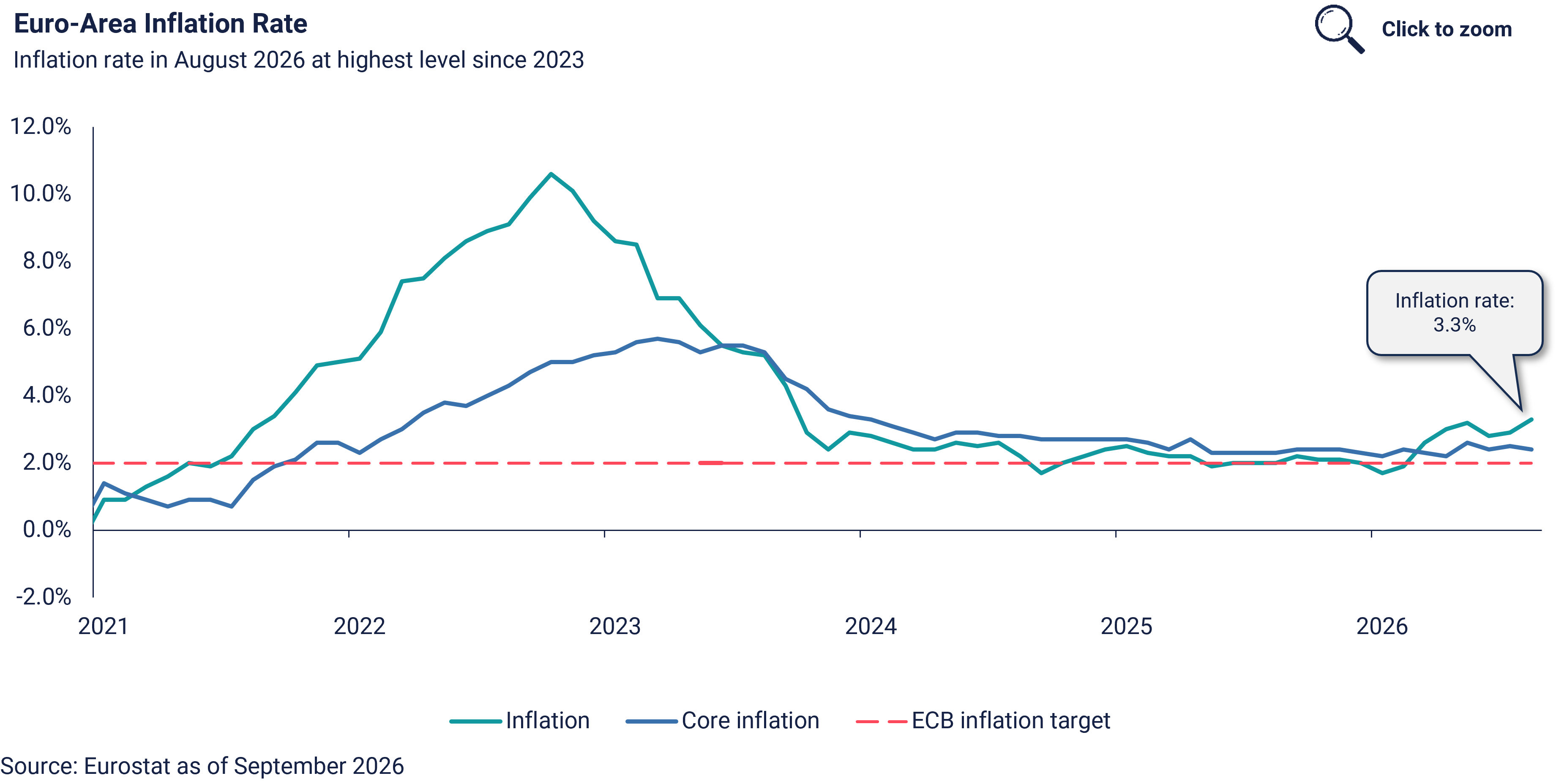
The ECB continued its tightening cycle in the third quarter. Following a pause in July, the ECB raised the deposit facility rate by 25 bps to 2.50% in September, with corresponding increases in the main refinancing and marginal lending rates. The decision comes amid renewed inflationary pressure. Euro area inflation rose to 3.3% in August, driven primarily by higher energy prices linked to the conflict in the Middle East, bringing inflation to its highest level since 2023. ECB staff projections now anticipate average inflation of 3.0% in 2026 and 2.5% in 2027, with inflation only approaching target in 2028.
The Bank of England, by contrast, kept Bank Rate unchanged at 3.75% in September. However, the 6–3 vote, with three members in favor of an increase to 4.00%, signals a growing inclination towards tightening within the Committee.
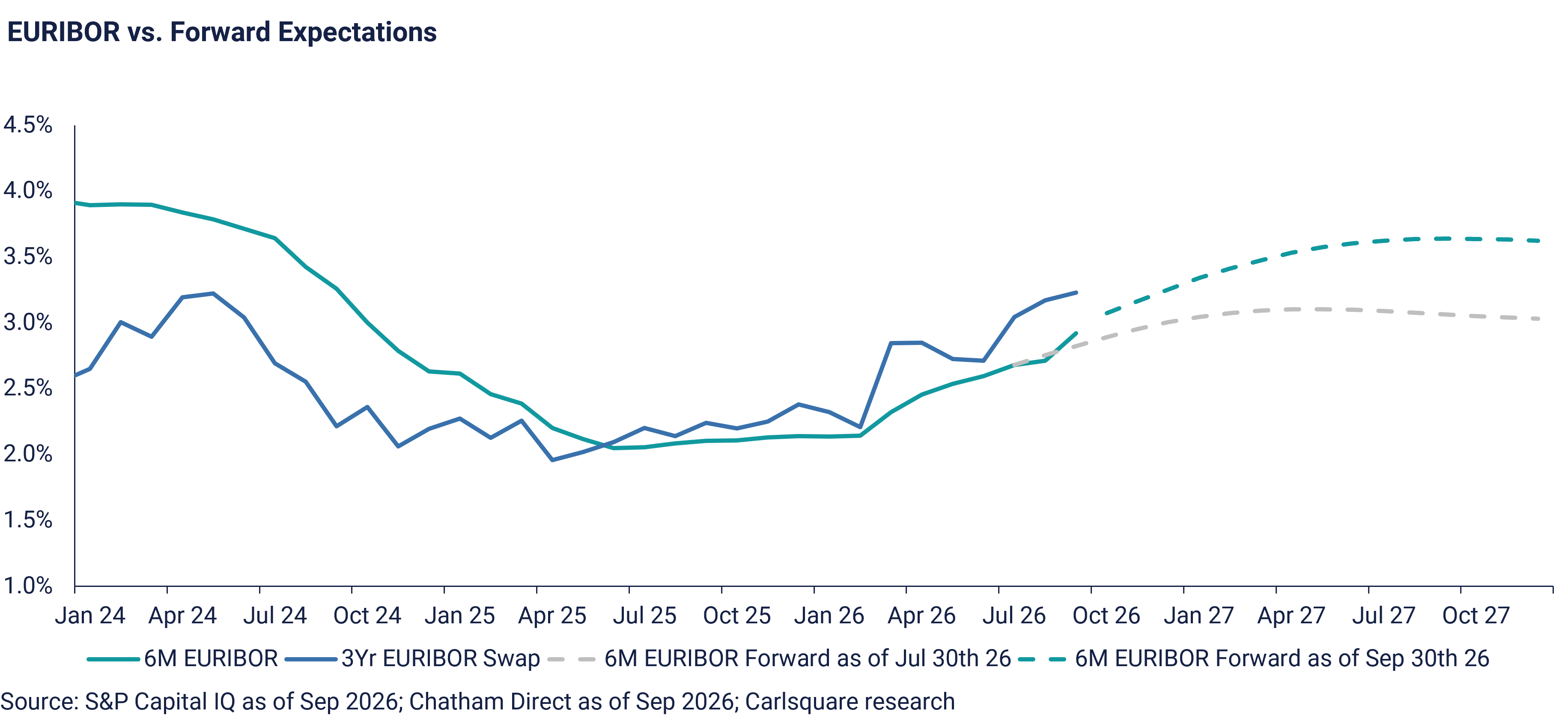
The latest update to Carlsquare’s forward expectations chart captures this shift: since our previous newsletter, the 6M EURIBOR forward curve has moved higher, with markets now pricing in a peak of around 3.25% in December 2026, compared with the 3.01% peak implied by the curve at the end of June. This suggests that markets anticipate further ECB tightening in the coming quarters.
Quarter Topic: Asset-based Lending
Asset-Based Lending – Unlocking liquidity from the balance sheet
When earnings are volatile, working-capital needs are rising, or conventional borrowing capacity is constrained, a company’s balance sheet may hold financing capacity that is not fully reflected in its cash-flow metrics. Receivables, inventory and, in some cases, equipment or real estate can support a secured facility and provide liquidity for day-to-day operations, growth or transactions.
This is the core idea behind Asset-Based Lending (ABL). Rather than relying primarily on a company’s leverage and cash-flow profile to determine borrowing capacity, an ABL lender assesses the quality, eligibility and realizable value of specified assets. For asset-rich businesses with fluctuating earnings or seasonal funding needs, ABL can complement cash-flow lending and provide a financing base that moves with the underlying asset pool. It is not a one-size-fits-all substitute: the value of the facility depends on collateral quality, documentation, monitoring and the company’s ability to manage the facility over time.
What is Asset-Based Lending?
Asset-Based Lending is a form of secured corporate lending in which a company borrows against defined assets. The most common collateral is accounts receivable and inventory; depending on the business and structure, machinery, equipment, real estate or other assets may also be included.
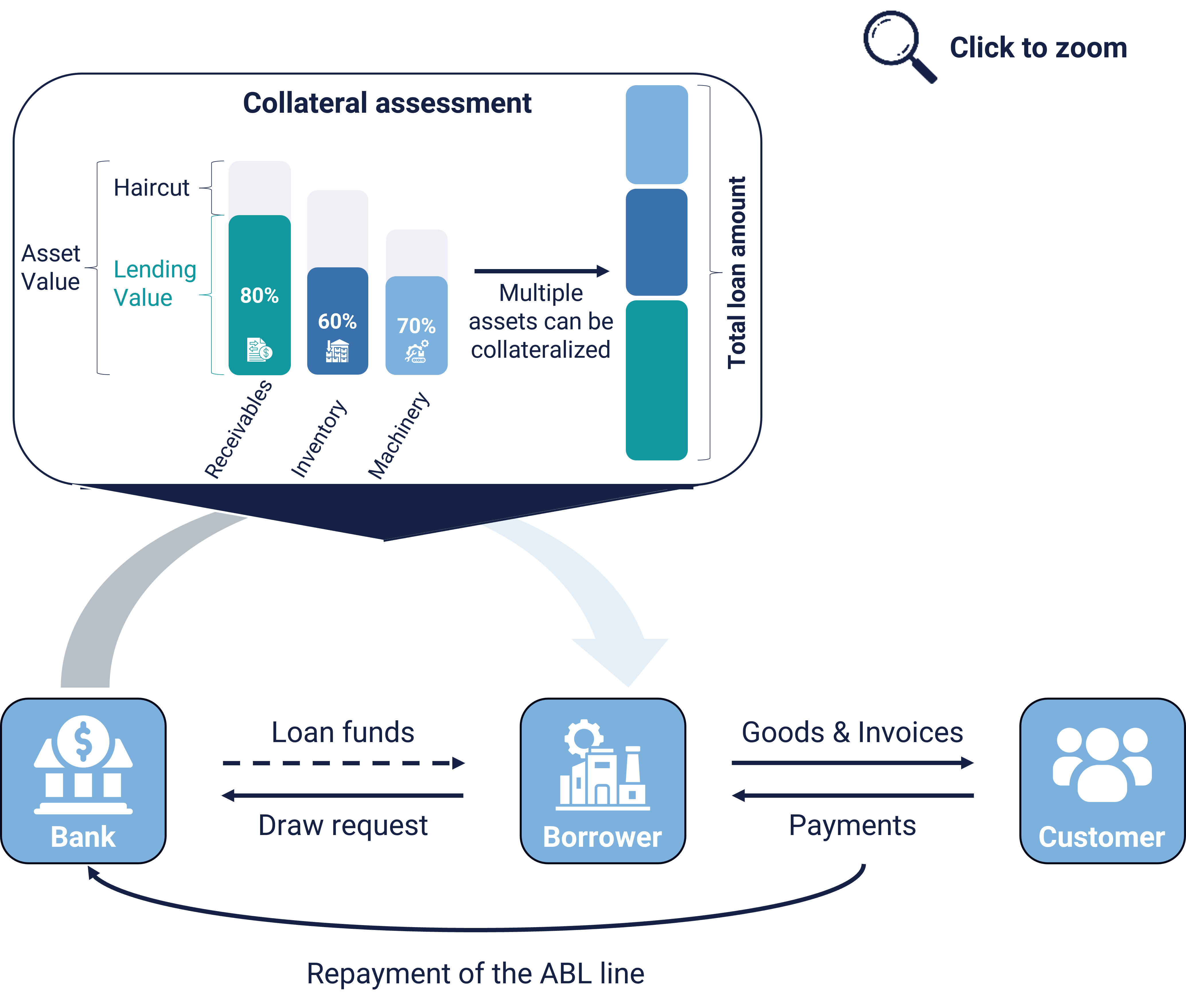
In a typical revolving facility, the lender establishes a borrowing base: the amount available is calculated by applying agreed advance rates to eligible collateral, less reserves and other deductions. Not every asset counts. Receivables may be excluded if they are overdue, disputed or overly concentrated in a small number of customers; inventory may be discounted or excluded if it is obsolete, perishable, specialized or difficult to realize. As eligible assets rise or fall, so does the amount the borrower can draw.
This differs from conventional cash-flow lending, where debt capacity is primarily underwritten against the company’s earnings, leverage and ability to service debt. In ABL, collateral and the systems used to report and control it are central to underwriting. Cash generation and the company’s overall credit profile still matter, however: the business must operate the facility and repay amounts drawn, while the lender needs confidence in the quality, enforceability and value of its security.
Which assets and structures are typically involved?
The most common ABL structures include:
- Receivables-backed revolving facilities: provide liquidity against eligible trade receivables, with availability affected by ageing, dilution, customer concentration and collectability
- Inventory-backed facilities: support borrowing against eligible stock, subject to valuation haircuts, inventory controls and the ease with which the stock can be resold
- Equipment or other fixed-asset lending: uses machinery, vehicles, equipment or, in some cases, real estate as collateral; valuation, useful life and liquidation prospects are key considerations
- Combined borrowing-base facilities: bring together receivables, inventory and, where appropriate, other collateral under one facility, with separate eligibility criteria and advance rates for each asset class
Who provides ABL and what are typical terms?
Banks remain important providers, particularly for established businesses with transparent reporting and a sizeable, well-managed collateral pool. Specialist ABL lenders and non-bank lenders may be relevant where the collateral is more complex, the borrower needs a tailored structure, or bank appetite is limited. Private-credit providers can also participate in bespoke or higher-complexity transactions. The best fit depends on the asset base, facility size, required certainty and the borrower’s existing debt and security arrangements.
ABL is commonly structured as a revolving credit facility, with borrowing availability recalculated periodically from a borrowing-base certificate. Receivables usually support higher advance rates than inventory, although actual rates are negotiated and depend on asset quality, concentration, jurisdiction and the lender’s ability to control and realize the collateral. Pricing typically comprises a margin, a commitment fee on undrawn amounts, and audit, appraisal and administration costs. The overall economics should therefore be assessed against the liquidity and flexibility gained.
Security is typically taken over the relevant collateral, often with first-ranking security over the assets included in the borrowing base. Lenders commonly require regular reporting, field examinations or collateral audits, periodic appraisals and agreed eligibility rules. Financial covenants may be less centered on leverage than in a cash-flow facility, but ABL may include lighter covenants such as minimum liquidity, borrowing-base, reporting, and other operational requirements. Existing security, intercreditor arrangements and any restrictions in current financing documents need to be reviewed before implementation.
The lender universe is broad and has expanded beyond traditional banks. Banks remain the main providers for larger, standardised facilities such as ABL, receivables programmes, and supply chain finance. Private credit funds are increasingly active where speed, flexibility, or complexity is higher, while specialty finance providers and independent factors often play a strong role in factoring and niche receivables solutions.
Typical terms in the European mid-market are usually revolving, with committed periods of 12–36 months. Borrowing capacity is set by a borrowing base, receivables generally attract higher advance rates than inventory, and pricing is usually a mix of margin or discount rate plus fees. Security is often first-ranking over receivables and/or inventory, and lenders typically focus on asset-quality, concentration, and reporting requirements rather than traditional leverage covenants.
Summary – Asset-Based Lending
Asset-Based Lending can turn eligible balance-sheet assets into a flexible source of liquidity, particularly for companies whose asset base is stronger or more dynamic than their earnings profile suggests. It can support working capital and growth while diversifying a company’s funding options, but availability is not fixed: it can contract if collateral values, eligibility or asset quality deteriorate. ABL also brings reporting, monitoring and security requirements, and it remains debt secured against company assets.
The right structure depends on the company’s operating model, asset quality, existing capital structure and ability to deliver reliable collateral information. Common use cases include:
- Funding seasonal peaks and working-capital requirements
- Supporting growth where receivables or inventory expand with sales
- Bridging periods of uneven or cyclical cash flow
- Releasing liquidity for investment, acquisitions or other corporate needs
- Diversifying funding sources or complementing an existing cash-flow facility
Sources
- ECB
- Eurostat
- Reuters
- PitchBook
- LCD
- Carlsquare Research
For any questions feel free to reach out to our authors Daniel Gebler, Head of Debt Advisory (Germany), Constantin von Wiedersperg, Director (Germany), and Andrew Hamilton, Director Debt Advisory (United Kingdom).