Managing Partner und Head of Debt Advisory
European Debt Markets: Quarterly Insights #3 2026
10 Aug 2026
Q2 2026
Key Insights:
- Leveraged Loan Issuance Rebounds in Q2 2026
European leveraged loan issuance reached EUR 32.5bn, exceeding last year’s Q2 of EUR 31.2bn, driven by strong refinancing activity. Direct lending totalled EUR 6.7bn across 30 transactions, bringing H1 2026 volume to EUR 15.2bn across 67 deals
- Pricing Power Strengthens
Spreads for TLBs, which are term loans with full repayment at maturity (TLB) and being subordinated to amortizing term loans (TLA) in the capital structure, fell to 330bps. This is the lowest since Q1 2008, with euro single-B deals tightening to 335bps. Yields still rose to 5.81% (from 5.64% in Q1) as rates fed through. The ECB raised rates 25bps to a 2.25% deposit rate
- Quarter Topic: Working Capital Financing
Amid geopolitical and macro uncertainty, working capital financing has regained strategic importance, releasing liquidity from receivables, payables and inventory without adding leverage
- Activity in the Small-Cap and Mid-Cap Segment
Carlsquare has been named among Germany’s most active debt advisors in 2026 by FINANCE magazine. Read more about our Small-Cap and Mid-Cap focus and the team behind it
European Debt Market – Q2 2026 Review
European leveraged lending activities
Leveraged loan issuance rebounded in Q2 2026
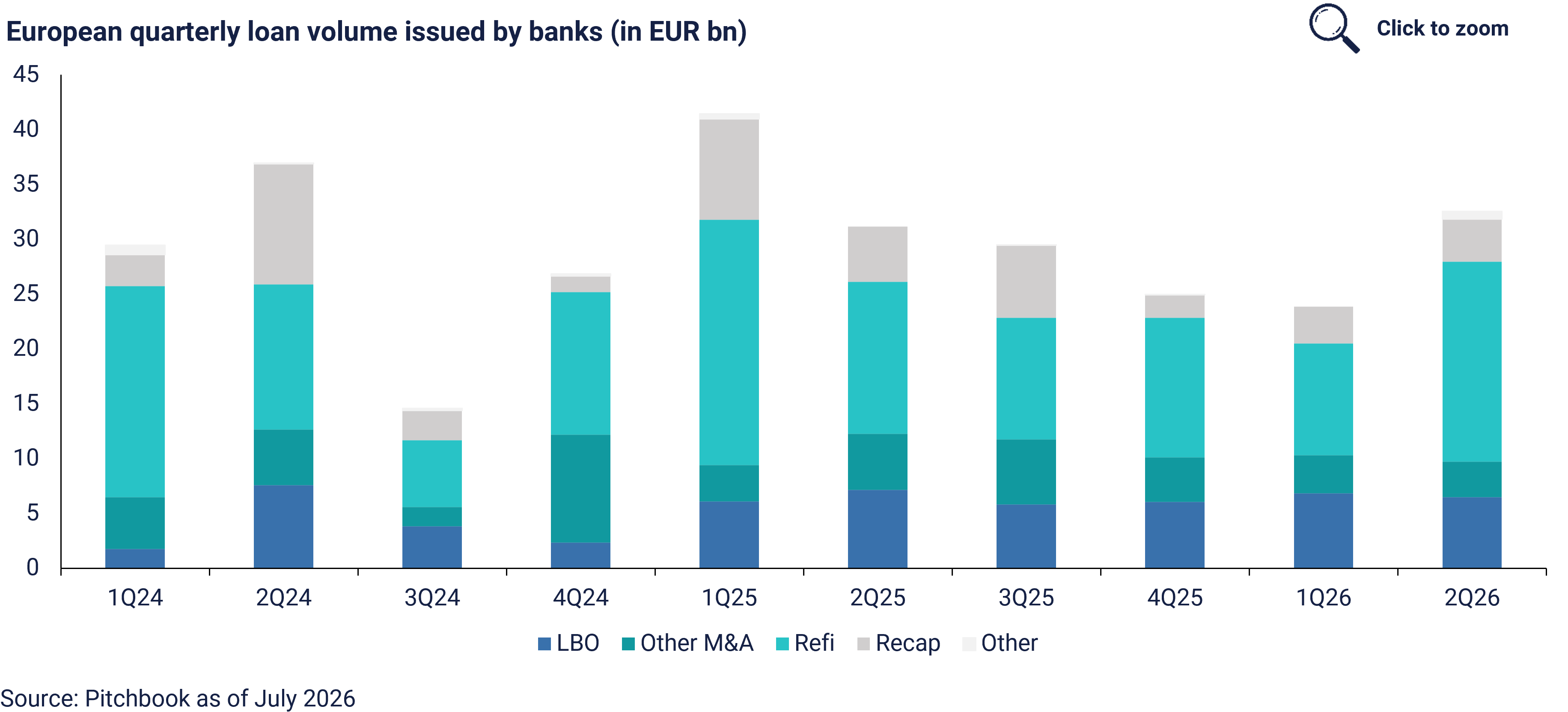
The European leveraged loan market came roaring back in the second half of Q2 2026 as borrower-friendly conditions returned and spreads fell to lows not seen since before the Global Financial Crisis. While April’s total volume remained subdued in the aftermath of first-quarter shocks from the Iran war and a software sell-off sparked by AI-disruption, activity accelerated rapidly thereafter. May became the second-busiest month of the year with healthy issuance of EUR 12.0bn, and June was the busiest month since June 2025, producing a volume tally of EUR 16.9bn. In total, leveraged loan issuance reached EUR 32.5bn in Q2 2026, exceeding last year’s Q2 volume of EUR 31.2bn.
As in the previous quarter, refinancing represented the largest share of issuance by financing purpose, followed by LBO activity. Refinancing-driven supply rose to EUR 18.2bn in Q2, up from EUR 10.2bn in Q1, underscoring that repricings, extensions and refinancings continued to account for the bulk of market activity. In contrast, M&A-related issuance remained muted at EUR 9.7bn and slightly below last quarter, reflecting a still-cautious transaction environment despite the improved tone in credit markets.
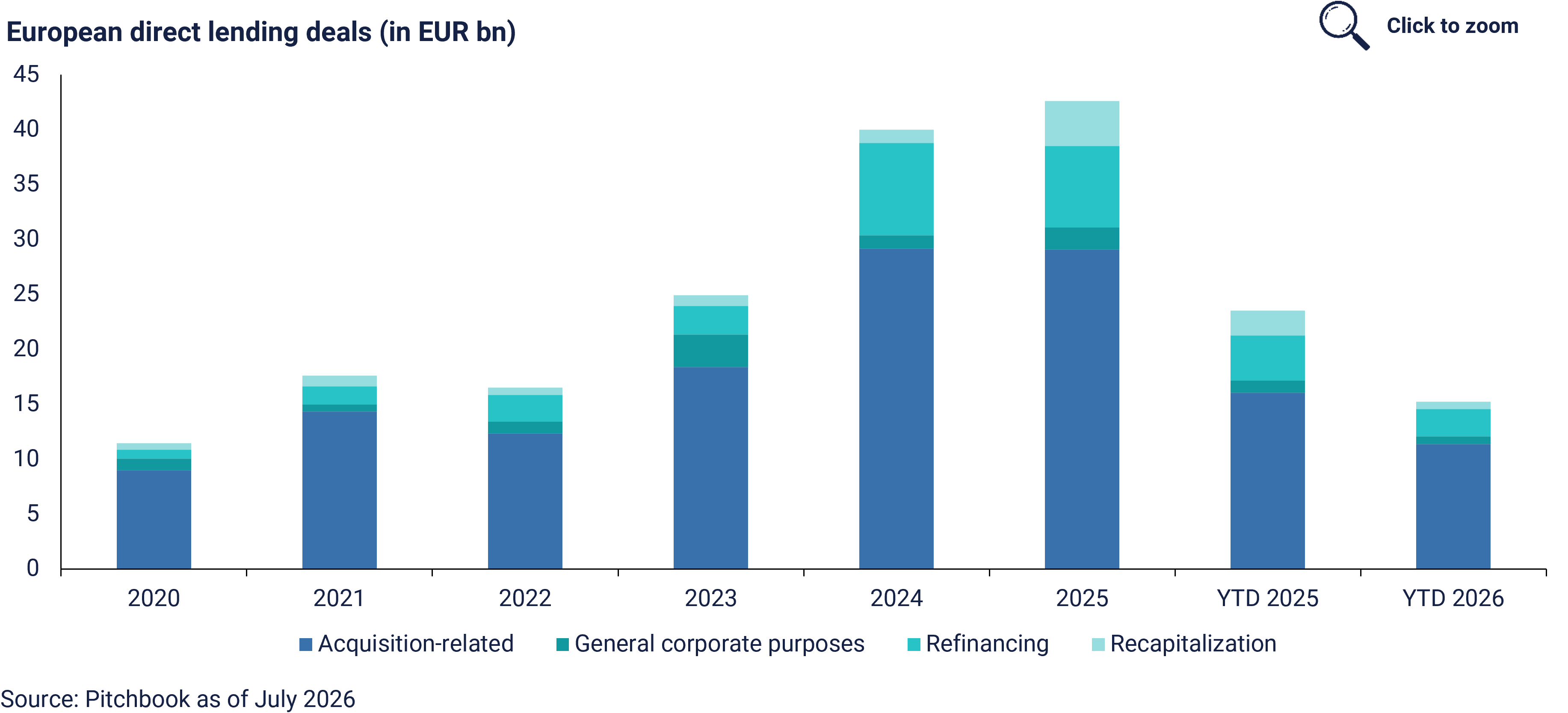
European direct lending volume reached an estimated EUR 6.7bn across 30 transactions in Q2 2026, bringing first-half 2026 activity to EUR 15.2bn across 67 transactions. This compares to EUR 23.5bn across 87 transactions in the first half of 2025, highlighting a materially softer volume environment year-on-year despite sustained deal flow.
Pricing power strengthened in Q2 2026 as spreads hit pre-Global Financial Crisis tights
Pricing in the European leveraged loan market continued to favour borrowers in Q2 2026. This was driven by a strong return of repricing activity and robust investor demand. According to LCD primary pricing data, average spreads for all European TLBs ended the quarter at 330 bps, the lowest level since Q1 2008, before the GFC.
For single-B rated borrowers, average spreads were 341 bps over the three months to end-June. Euro-denominated single-B deals tightened further to 335 bps on average, also the lowest level since before the GFC.
At the same time, all-in yields moved slightly higher as interest rates fed through into borrowing costs. Yields for euro-denominated single-B issuers rose to 5.81% in Q2, up from 5.64% in Q1. For the average single-B borrower, the market’s resistance point for new deals and repricings settled at around E+300.
Stay up to date with relevant Debt News by subscribing to quarterly newsletter.
Outlook on interest rate environment
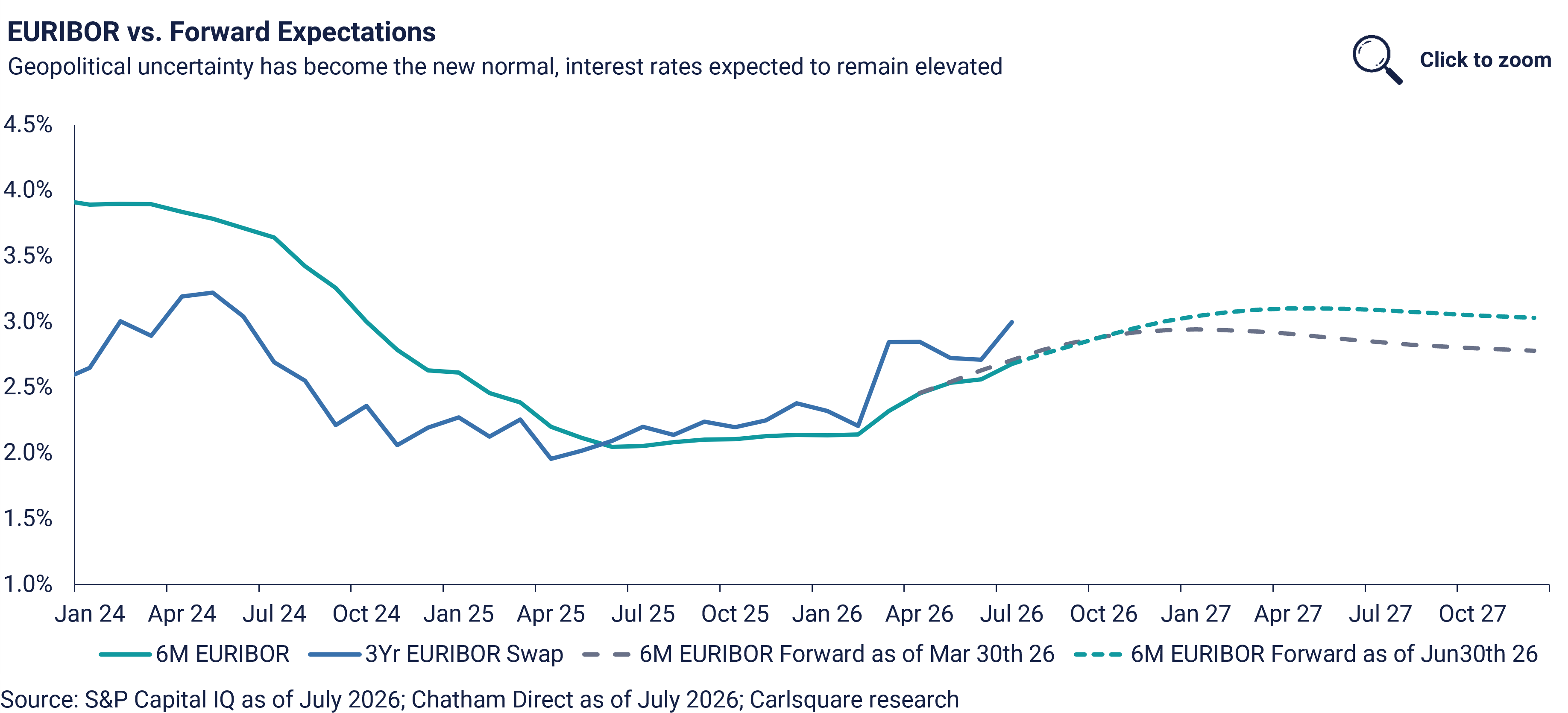
The ECB raised rates by 25 bps at its latest meeting in June 2026, bringing the deposit facility rate to 2.25% (with corresponding increases in the main refinancing and marginal lending rates). The ECB reiterated its aim to bring inflation back towards ~2% over the medium term, while highlighting heightened geopolitical risks and inflation pressures linked in part to developments in the Middle East. Against this backdrop, near-term inflation expectations remained elevated, with 12-month-ahead inflation expectations (May 2026) at 3.5% (median).
In contrast, the Bank of England kept Bank Rate unchanged at 3.75% throughout the quarter. Market commentary pointed to a more dovish tone, reflecting weaker demand and softer growth dynamics, with pricing increasingly factoring in the possibility of reductions later in 2026.
As illustrated in Carlsquare’s Euribor vs. Forward Expectations chart, a comparison of the forward curves at the end of Q1 and Q2 shows that market participants expect interest rates to remain broadly stable amid ongoing geopolitical uncertainty.
Quarter Topic: Working Capital Financing
Working Capital Financing – Unlocking liquidity from the operating cycle
Recent geopolitical shocks, persistent macro uncertainty, and ongoing supply chain disruptions are fundamentally affecting the financing environment. The Iran war, AI-driven repricing of assets, and stagflation concerns have pushed funding costs higher while lenders have grown increasingly selective. At the same time, growth still needs funding, not only for capex or M&A, but for the day-to-day mechanics of scaling: building inventory, paying suppliers, and waiting for customers to settle invoices.
In this context, working capital financing has (re-)gained strategic importance. It is often one of the most likely ways to release liquidity from the balance sheet without permanently increasing “classic” leverage, particularly for businesses with expanding revenues, seasonal peaks, or longer receivables cycles. Done right, it improves resilience and supports growth while keeping flexibility in the capital structure.
What is Working Capital Financing?
Working capital financing refers to short-term funding solutions that are backed by, or directly linked to, a company’s working capital assets and flow, primarily receivables, payables, and inventories. Its purpose is to ensure sufficient liquidity to cover near-term obligations and support growth, rather than financing long-term capex or acquisitions.
The basic principle distinguishes it from conventional corporate lending: rather than evaluating the creditworthiness of the company itself, lenders primarily look to the underlying working capital positions – the quality of the receivables and debtor creditworthiness in receivables financing, or the value and liquidity of collateral such as inventory and receivables in asset-based lending. This makes working capital financing accessible to a broader range of companies – including those with limited earnings history or constrained headroom under existing senior facilities.
For growing businesses, it can be a particularly powerful instrument: as revenues scale, trade receivables and inventories typically scale with them. In other words, the operating asset base expands automatically, and so does the liquidity required to bridge the timing gap between cash out (suppliers, payroll, logistics) and cash in (customer collections).
Which debt instruments are used?
The most common instruments in the working capital financing landscape include:
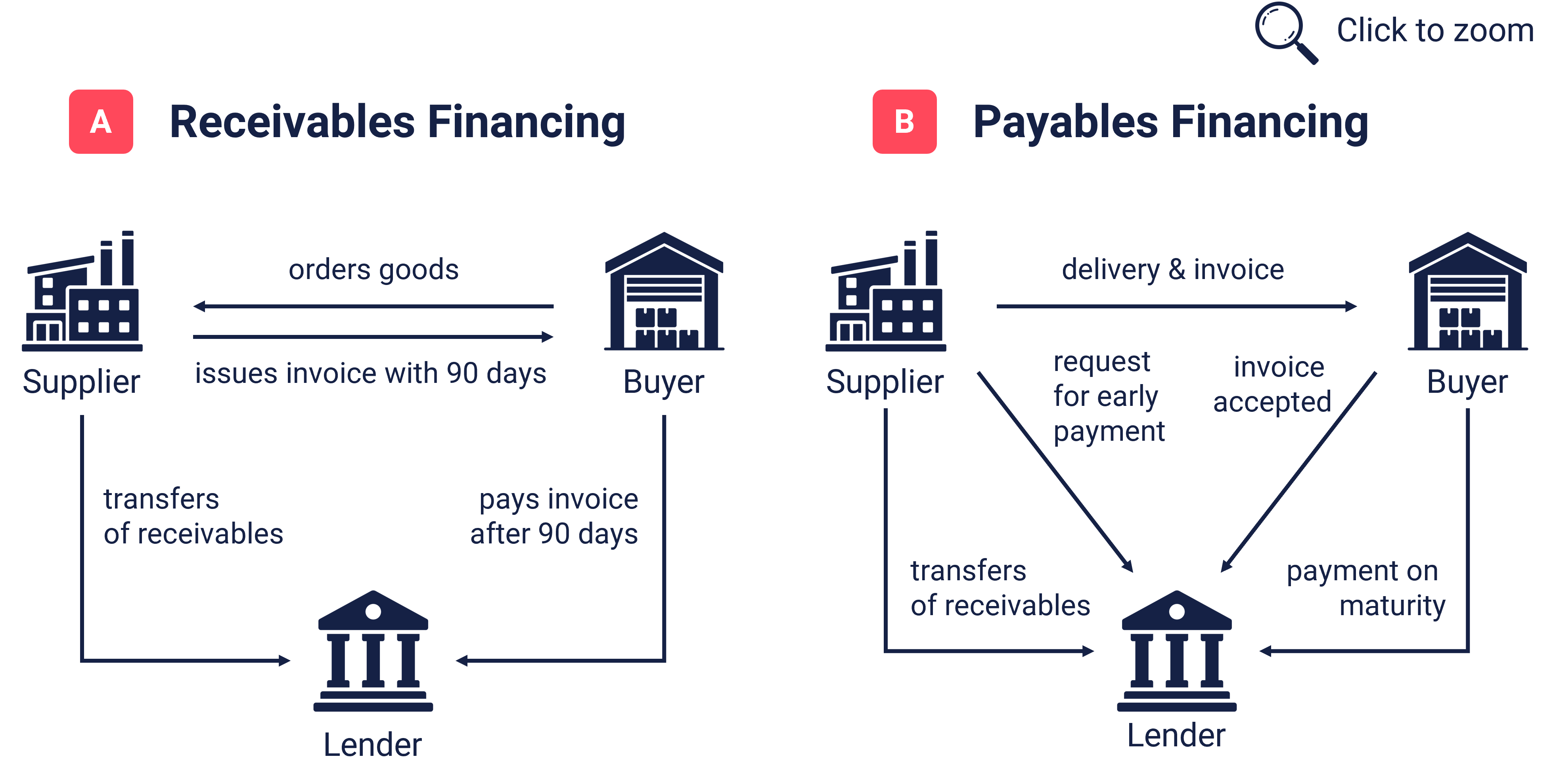
- Accounts Payable Financing
- Enables a company to pay suppliers early through a financier while keeping more cash on hand for longer
- Accounts Receivable Financing
- Converts unpaid invoices into immediate cash, usually against a percentage of their value
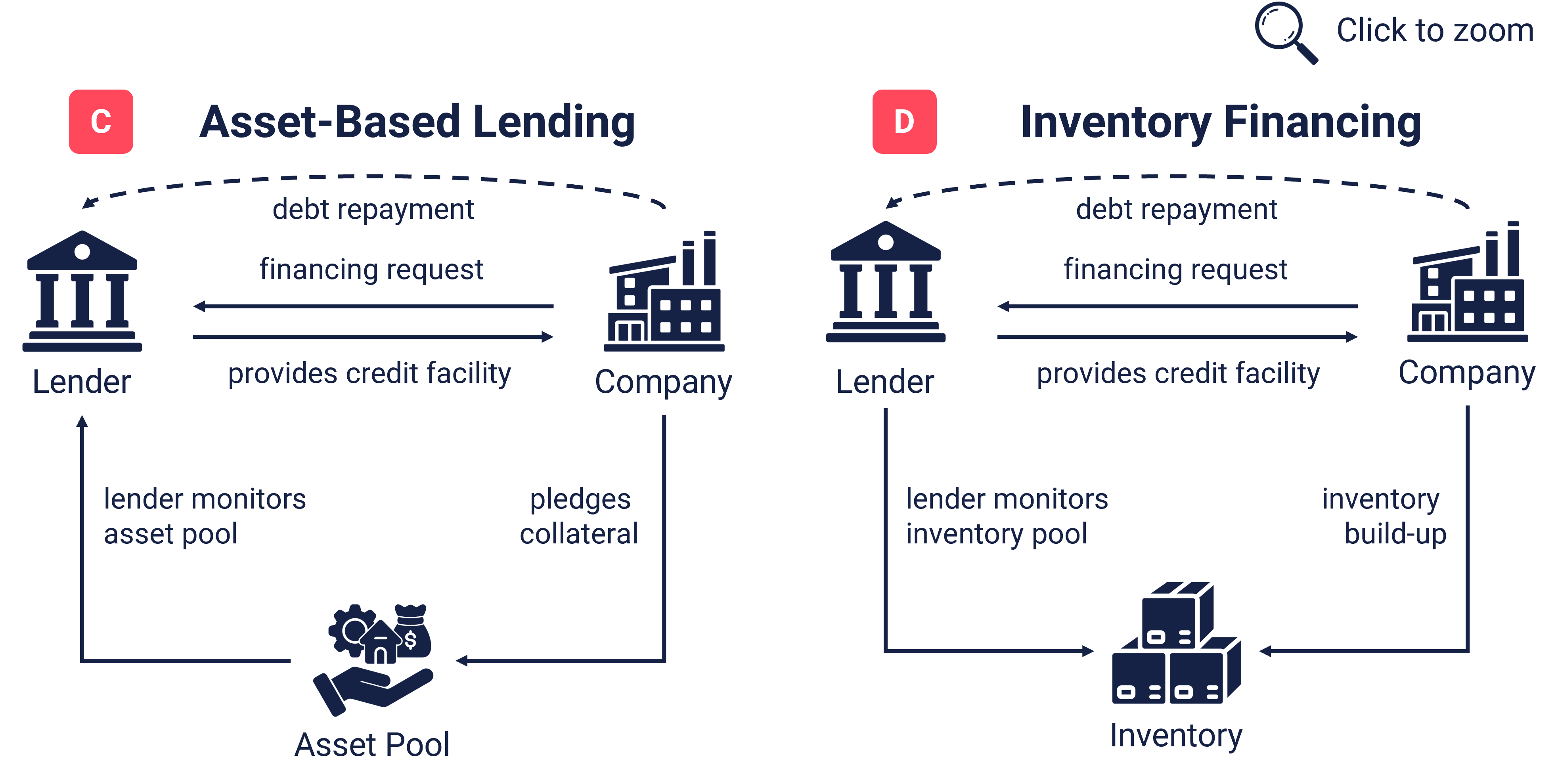
- Asset-Based Lending (ABL)
- A revolving facility secured by assets such as receivables or inventory, with borrowing capacity moving up and down as those assets change
- Inventory Financing
- Unlocks cash tied up in stock, helping fund seasonal build-ups or safety stock without tying up operating liquidity
- Supplier-led receivables financing (Factoring)
- Allows suppliers to sell buyer-approved invoices to a financier for immediate cash, supporting supplier liquidity and enabling longer buyer payment terms (i.e. positive cash effect for buyer). This solution can be attractive in cases were the supplier benefits from a strong(er) credit rating
Who provides Working Capital Financing and what are typical terms?
The lender universe is broad and has expanded beyond traditional banks. Banks remain the main providers for larger, standardised facilities such as ABL, receivables programmes, and supply chain finance. Private credit funds are increasingly active where speed, flexibility, or complexity is higher, while specialty finance providers and independent factors often play a strong role in factoring and niche receivables solutions.
Typical terms in the European mid-market are usually revolving, with committed periods of 12–36 months. Borrowing capacity is set by a borrowing base, receivables generally attract higher advance rates than inventory, and pricing is usually a mix of margin or discount rate plus fees. Security is often first-ranking over receivables and/or inventory, and lenders typically focus on asset-quality, concentration, and reporting requirements rather than traditional leverage covenants.
Summary – Working Capital Financing
Working capital financing is an efficient instrument in the mid-market financing toolkit — and in the current environment one relevant instrument to receive short-term financings. For businesses with meaningful receivables, inventory, or payables flows, it offers a way to unlock balance sheet liquidity without permanently increasing leverage or consuming headroom under existing senior facilities. The right instrument depends on the company’s operating model, asset quality, and cash conversion cycle, but the most common use cases include:
- Growth financing without adding term debt
- Seasonal liquidity management
- Supply chain resilience
- Capital structure optimisation
- Balance sheet efficiency
Sources
- ECB, PitchBook, LCD, Carlsquare research
- Monetary policy decisions
- Working Capital Solutions | Pemberton Asset Management
- Private Market Data, Research & Tools – PitchBook
- Working-capital-finance-the-future-ENG.pdf
For any questions feel free to reach out to our authors Daniel Gebler, Head of Debt Advisory (Germany), Constantin von Wiedersperg, Director (Germany), and Andrew Hamilton, Director Debt Advisory (United Kingdom).



Similar Insights